Diagnosis
A clinical examination and focused X-ray help identify the source of pain and whether restoration is clinically feasible.
Assessment · endodontic care · restoration
Root canal treatment is used to treat inflammation or infection inside a tooth and may allow the tooth to remain in function. Not every toothache requires this treatment, and suitability can only be assessed clinically.
Request a consultation ↗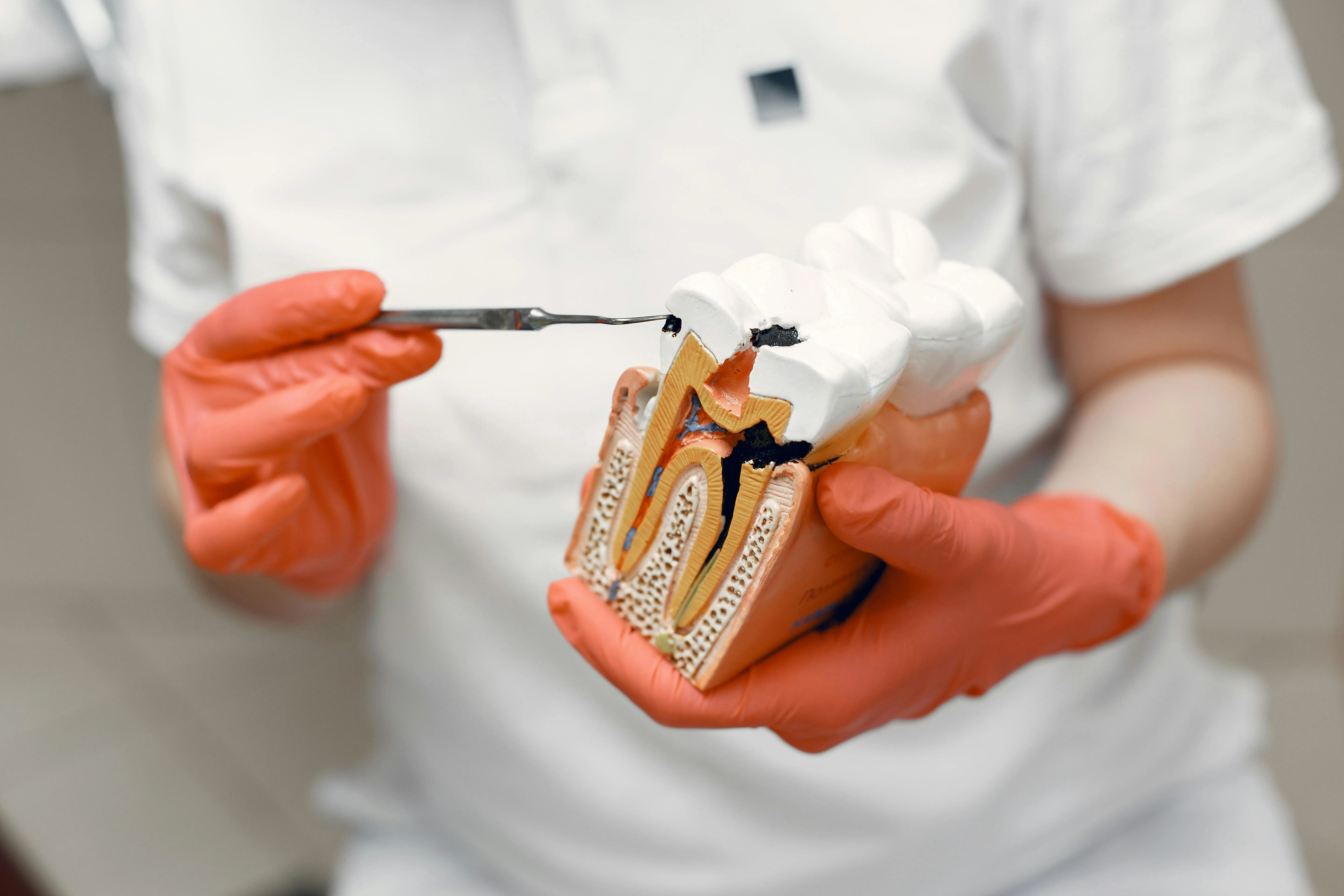
01 When to arrange a visit
These signs can have more than one cause. A clinical examination is needed to identify relevant findings and discuss possible diagnoses.
02 Dr. Varnica’s approach
Your exact plan depends on clinical findings. These are the principles that guide the journey.
A clinical examination and focused X-ray help identify the source of pain and whether restoration is clinically feasible.
Local anaesthesia is administered when indicated. Sensation varies, and patients should tell the treating dentist about discomfort.
Inflamed or infected tissue is removed and the root canals are shaped, disinfected and sealed using endodontic instruments and materials.
A filling or crown may be recommended according to the remaining tooth structure, tooth position and biting forces.
03 Common questions
Local anaesthesia is commonly used during treatment. Sensation and discomfort vary between patients and may also depend on the condition of the tooth. Tell the treating dentist if you feel discomfort or need a pause.
Some cases can. Others benefit from two or more visits depending on infection, anatomy and previous treatment. The plan is explained after examination.
Back teeth often need the protection of a crown, but the decision depends on how much healthy tooth remains, its position and the forces on it.
A previously treated tooth can sometimes become reinfected. Re-root canal treatment may be possible after assessing the tooth and existing restoration.
Information on this page is educational. It cannot diagnose your condition or confirm which treatment is suitable without an in-person clinical examination and, where indicated, diagnostic imaging.
General references: American Association of Endodontists: Root Canal Explained